


What Is a Chenille Patch?
A chenille patch is a type of decorative patch made from looped yarn that creates a soft, fuzzy, textured surface. The word “chenille” comes from the French word for caterpillar, referring to the patch’s plush appearance. Chenille patches are widely associated with varsity jackets, college apparel, sports teams, and retro fashion.
Unlike standard embroidery, chenille patches rely on thick yarn loops stitched into fabric backing. This construction gives the patch a raised, fluffy texture that stands out visually and physically. The result is a bold, highly recognizable design often used for large letters, mascots, and simple shapes.
Because chenille patches emphasize texture over fine detail, they work best with large graphics and simple lettering. Brands and organizations often choose them when they want a vintage, athletic, or premium streetwear aesthetic.
Chenille Patch vs Embroidered Patch Comparison
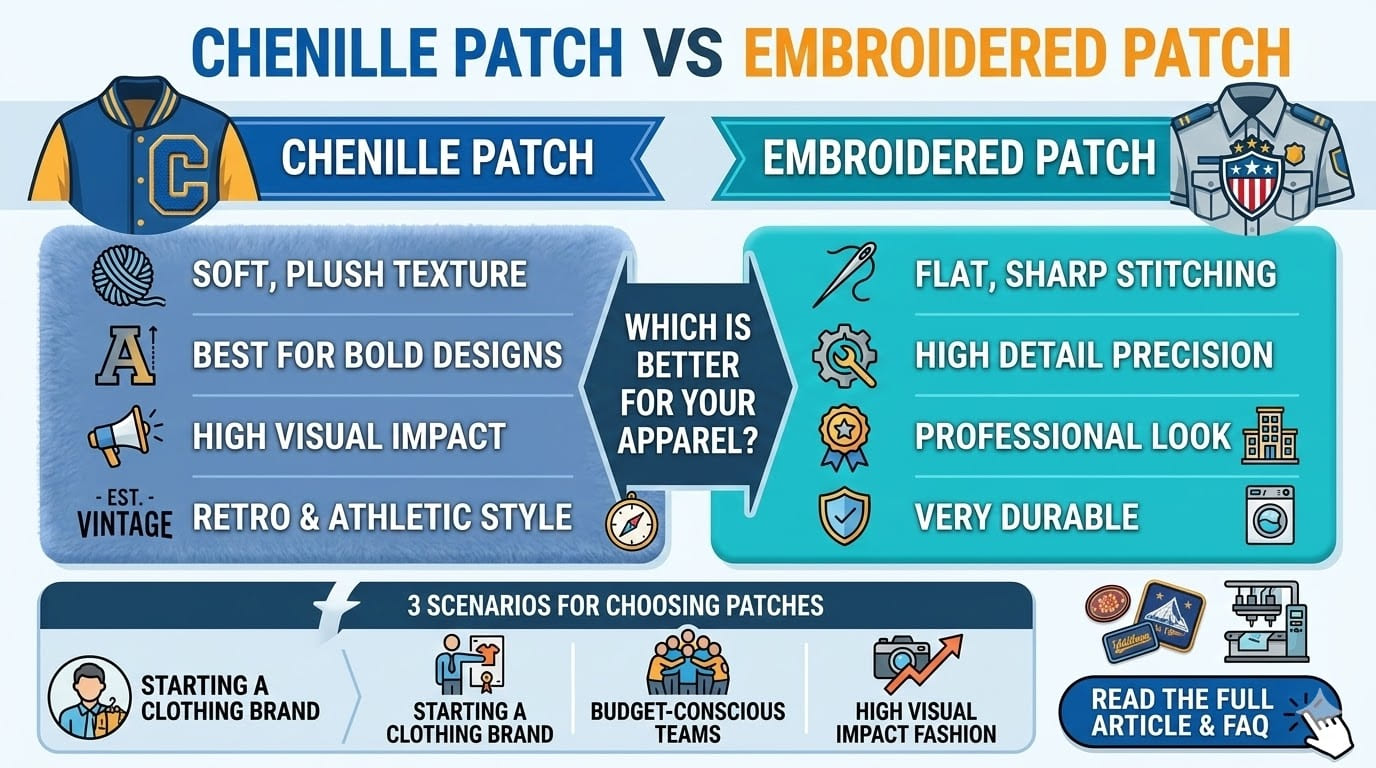
When choosing custom patches, two of the most common options are chenille patches and embroidered patches. Each method offers different visual results, durability levels, and design flexibility.
| Feature | Chenille Patch | Embroidered Patch | Best For |
|---|---|---|---|
| Texture | Soft, fluffy yarn loops | Flat thread stitching | Chenille for bold visual impact |
| Detail level | Low to medium | High precision | Embroidered logos |
| Style | Vintage / varsity | Professional / uniform | Depends on brand identity |
| Durability | Durable but softer surface | Highly durable stitching | Heavy-use garments |
| Design size | Best for large shapes | Works with small details | Depends on artwork |
In general, chenille patches excel when the design is bold and minimal, while embroidered patches are better suited for detailed logos and text.
3 Recommended Scenarios for Choosing Patches
1. Beginners launching a clothing brand
If you are starting a clothing brand or streetwear line, chenille patches are often a strong visual choice. Their thick texture and retro style create a premium look that stands out on hoodies, varsity jackets, and caps.
2. Budget-conscious teams or organizations
For sports teams, clubs, or school groups ordering patches in bulk, embroidered patches can sometimes provide better cost efficiency for detailed logos. They also offer strong durability for uniforms that are washed frequently.
3. Brands focused on visual impact and texture
If the goal is to create bold fashion statements or varsity-style designs, chenille patches provide a unique tactile look that embroidery cannot easily replicate.
Chenille Patch Cost and Production Factors
The cost of custom chenille patches varies depending on several production factors. Unlike simple embroidery, chenille manufacturing involves thicker yarn and specialized machinery.
| Factor | Description |
|---|---|
| Patch size | Larger patches require more yarn and production time. |
| Color count | More colors increase complexity. |
| Backing type | Iron-on, sew-on, or Velcro backing affects price. |
| Order quantity | Bulk production usually reduces the unit price. |
6 Common Mistakes When Ordering Chenille Patches
- Choosing chenille for designs with very fine details
- Using too many colors in a small patch
- Not checking patch size before production
- Ignoring garment compatibility
- Ordering without reviewing a digital proof
- Choosing the wrong backing option
How Chenille Patches Are Made
1. Design preparation
The artwork is converted into a production file compatible with chenille embroidery machines.
2. Yarn stitching
Thick yarn loops are stitched onto the base fabric to create the textured chenille surface.
3. Border embroidery
A stitched border is added to reinforce the edges of the patch.
4. Backing application
Iron-on or sew-on backing is attached depending on the final application.
Chenille Patch FAQ
What is the main difference between chenille patches and embroidered patches?
Chenille patches use thick yarn loops to create a soft textured surface, while embroidered patches use flat thread stitching for detailed designs.
How much do chenille patches cost?
The price depends on size, color count, and quantity. Larger bulk orders typically reduce the cost per patch.
How long does it take to produce chenille patches?
Production time usually ranges from 1–3 weeks depending on order size and manufacturing capacity.
Who should choose chenille patches?
Chenille patches are ideal for fashion brands, sports teams, varsity jackets, and designs that require a bold textured appearance.
What are the disadvantages of chenille patches?
They are not ideal for highly detailed artwork and may require larger patch sizes to maintain clarity.
Are chenille patches durable?
Yes, when properly stitched and applied, chenille patches are durable and commonly used on jackets and uniforms.
Can chenille patches be ironed on?
Many chenille patches include iron-on backing, but sewing them onto garments usually provides the most secure attachment.
What materials are used in chenille patches?
Chenille patches typically use acrylic yarn combined with a fabric base such as felt or twill.
Are chenille patches suitable for small logos?
They are better suited for larger designs because the yarn loops limit fine detail.
Which patch type lasts longer?
Both chenille and embroidered patches are durable, but embroidered patches usually perform better for highly detailed or high-wear applications.